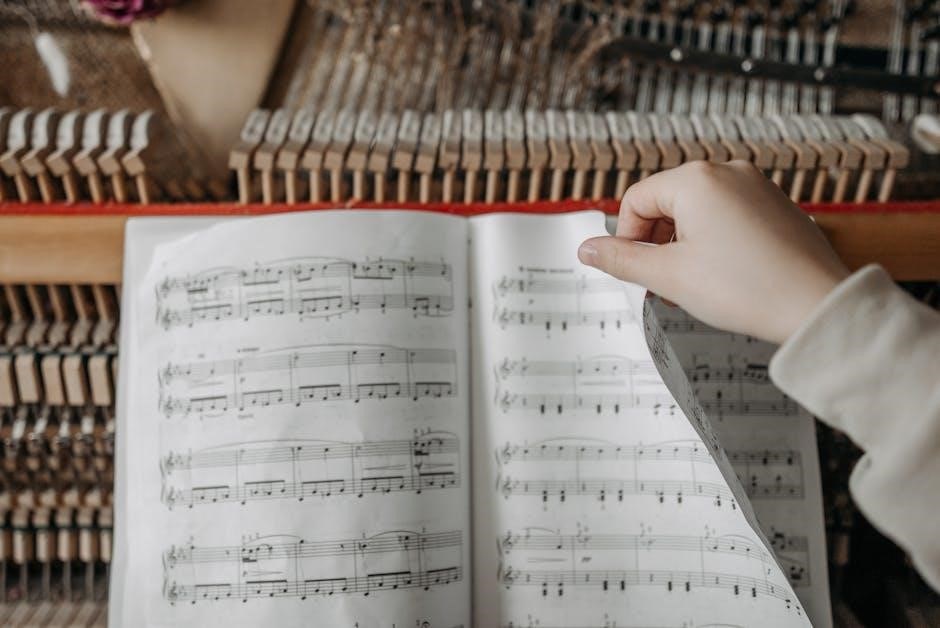
The Phantom of the Opera Sheet Music PDF: A Comprehensive Guide (Updated 02/27/2026)
Today, February 27th, 2026, accessing Phantom of the Opera sheet music in PDF format is remarkably easy, offering options for piano, guitar, and flute.
Numerous websites boast over a million digital scores, catering to musicians of all levels – from beginners to seasoned professionals – eager to learn and perform.
Free downloads are readily available, including complete musical scores and individual song arrangements like “Think of Me” and “The Music of the Night.”
These resources provide access to arrangements from the musical, movie themes, and pop-rock adaptations, often sourced from communities like Faluh Karzan.
What is “The Phantom of the Opera”?
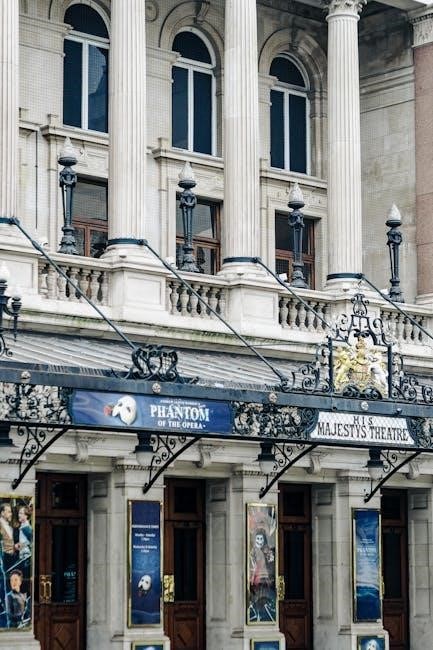
“The Phantom of the Opera” is a globally renowned musical, born from Gaston Leroux’s 1910 novel, and spectacularly brought to life by Andrew Lloyd Webber, Charles Hart, and others.
The story unfolds within the opulent Paris Opera House, centering on a masked musical genius – the Phantom – who haunts its depths and becomes obsessively devoted to a young soprano, Christine Daaé.
Its enduring appeal stems from a captivating narrative of love, obsession, and mystery, coupled with breathtaking music and lavish stage productions. The musical premiered in 1986 and quickly became a worldwide sensation, continuing to enchant audiences today.
Consequently, the demand for “The Phantom of the Opera” sheet music PDF versions has surged, allowing musicians to recreate its iconic melodies. The availability of these scores, encompassing piano, guitar, and vocal arrangements, fuels the passion of fans and performers alike, ensuring the Phantom’s music lives on.
The Popularity of Phantom of the Opera Sheet Music
The immense popularity of “Phantom of the Opera” sheet music, particularly in PDF format, directly reflects the musical’s enduring cultural impact. Musicians worldwide are drawn to its complex and emotionally resonant compositions.
The accessibility of digital sheet music has dramatically increased its reach, allowing both amateur and professional players to learn and perform these iconic pieces. Websites offering free and paid scores report consistently high download rates for songs like “The Music of the Night” and the title track.
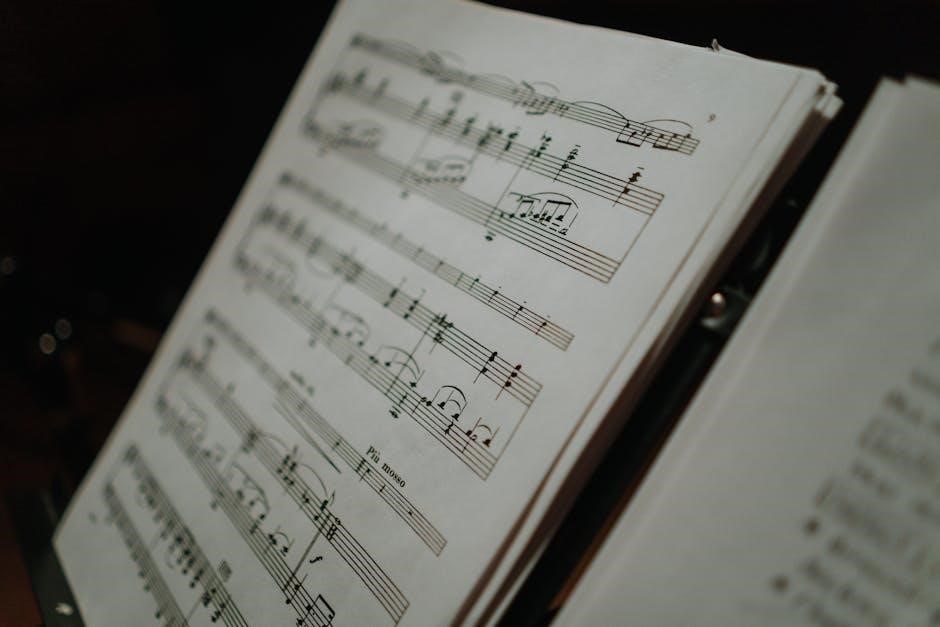
This demand isn’t limited to piano scores; guitar arrangements and simplified versions for other instruments are also highly sought after. The availability of these resources fosters a vibrant community of musicians dedicated to recreating the Phantom’s musical world, ensuring its continued relevance and enjoyment.
The ease of sharing and printing PDF files further contributes to its widespread appeal.
Finding Free Sheet Music Online
Numerous websites provide free Phantom of the Opera sheet music PDFs, offering scores for piano, guitar, and flute to musicians globally.
Digital platforms host over a million scores, readily available for download and performance practice.
Major Sheet Music Websites Offering Phantom of the Opera Scores
Several prominent online platforms consistently feature Phantom of the Opera sheet music in PDF format. These sites act as central hubs for musicians seeking arrangements for various instruments.
Musicnotes.com and SheetMusicPlus.com are well-known for their extensive catalogs, often including officially licensed scores. While not always free, they offer high-quality, professionally arranged music.
IMSLP (International Music Score Library Project), a public domain resource, sometimes hosts arrangements, though availability varies. Many smaller websites and forums also compile links to free scores found across the web.
Communities dedicated to Andrew Lloyd Webber’s work frequently share resources, including PDF versions of songs like “The Phantom of the Opera” and “The Music of the Night”. Remember to always verify the legality and quality of free downloads.
Exploring these major websites provides a solid starting point for locating the desired sheet music.
Specific Websites for Free PDF Downloads
Locating free Phantom of the Opera sheet music PDFs requires navigating various online resources. While quality and legality vary, several sites consistently appear in searches.
Free-scores.com offers a selection of arrangements, though the catalog isn’t exhaustive. Musescore.com, a community-driven platform, hosts numerous user-submitted scores, including those from the musical.
Bitmidi.com provides MIDI and PDF transcriptions, often created by enthusiasts. Faluh Karzan’s website (faluhkarzan.kit.net), mentioned in online discussions, appears to be a dedicated resource, though its current status should be verified.
Be cautious when downloading from unfamiliar sites; scan files for viruses. Remember that copyright restrictions apply, and using illegally obtained sheet music is discouraged. Always prioritize legally sourced options when available.
These websites offer a starting point, but diligent searching is often necessary.
Legality and Copyright Considerations
Downloading and using Phantom of the Opera sheet music PDFs raises important legal and ethical considerations regarding copyright. Andrew Lloyd Webber’s works are protected by copyright law, meaning unauthorized reproduction and distribution are illegal.
Many “free” PDF downloads found online infringe upon these rights. While some sites offer arrangements with permission or fall under fair use, many do not. Using illegally obtained sheet music can lead to legal repercussions, though enforcement for individual users is rare.
Prioritize purchasing sheet music from authorized retailers like Musicnotes.com or directly from the publisher. Consider subscription services offering legal access to a vast library of scores.
Supporting copyright holders ensures continued creation and availability of musical works. Respecting intellectual property is crucial for a thriving musical community.
Always verify the source and licensing before using any downloaded sheet music.
Key Songs & Available Sheet Music
Popular songs like “The Phantom of the Opera,” “The Music of the Night,” “Think of Me,” and “Angel of Music” all have readily available sheet music PDFs.
These scores cater to various instruments, including piano, guitar, and flute, offering diverse arrangements for musicians.
“The Phantom of the Opera” ⏤ Title Song Sheet Music
The iconic title song, “The Phantom of the Opera,” boasts widespread availability in sheet music PDF format, catering to a broad spectrum of musical abilities; Numerous websites dedicated to sheet music compilation and distribution feature arrangements for piano, guitar, and even flute.
These PDFs range from simplified versions suitable for beginner pianists to complex, fully orchestrated scores for advanced performers. Many resources offer both vocal scores, including lyrics by Charles Hart, and instrumental arrangements, allowing for diverse interpretations.
Free downloads are common, though quality can vary; some PDFs are pristine scans, while others may exhibit imperfections. Musicians can find versions tailored to different skill levels, ensuring accessibility for all who wish to tackle this dramatic and emotionally resonant piece. Websites like those hosting over a million digital scores frequently include this cornerstone of the musical’s repertoire.
Furthermore, arrangements often reflect adaptations from the original musical, film versions, or even pop-rock interpretations, providing a wealth of options for performers.
“The Music of the Night” ⏤ Sheet Music Availability
“The Music of the Night” is exceptionally popular among musicians seeking sheet music in PDF format, reflecting its status as a cornerstone of The Phantom of the Opera. A vast online community of sheet music creators and distributors offers numerous arrangements for various instruments, prominently including piano, guitar, and flute.
Accessibility is high, with countless free PDF downloads available across multiple platforms. These range from simplified piano arrangements for beginners to more intricate versions demanding advanced skills. Vocal scores, complete with lyrics, are also widely accessible, allowing singers to accompany themselves or perform with others.
Websites boasting over a million digital music sheets consistently feature this piece, often presenting multiple arrangements to suit different preferences and skill levels. The availability extends to pop-rock adaptations, offering a contemporary twist on the classic composition.
Musicians can readily find resources to learn and enjoy this iconic song, thanks to the abundance of online sheet music options.
“Think of Me” ― Sheet Music Options
“Think of Me”, a captivating piece from The Phantom of the Opera, enjoys widespread availability in PDF sheet music format. Numerous online resources, including major sheet music websites and dedicated communities, offer arrangements for piano, guitar, and flute, catering to diverse musical preferences.
Free downloads are plentiful, ranging from beginner-friendly simplified versions to more challenging arrangements for experienced musicians. Vocal scores, complete with lyrics, are also readily accessible, facilitating performance by singers. The song’s popularity ensures a consistent stream of new arrangements and transcriptions.
Platforms hosting over a million digital music sheets consistently feature “Think of Me,” often presenting multiple versions to accommodate varying skill levels. These resources provide convenient access for musicians seeking to learn and perform this iconic song.
Finding suitable sheet music for “Think of Me” is remarkably straightforward, thanks to the extensive online availability.
“Angel of Music” ⏤ Sheet Music Resources
“Angel of Music”, a hauntingly beautiful melody from The Phantom of the Opera, boasts a substantial online presence in PDF sheet music. A wealth of resources, including dedicated sheet music websites and expansive online communities, provide arrangements for various instruments like piano, guitar, and flute.
Free PDF downloads are commonly found, offering options for different skill levels – from simplified versions for beginners to complex arrangements for advanced players. Vocal scores, complete with lyrics, are also widely available, supporting vocal performances.
Websites containing over a million digital music sheets consistently feature “Angel of Music,” often presenting multiple transcriptions and arrangements. These resources cater to musicians eager to learn and perform this iconic piece.
Accessing sheet music for “Angel of Music” is simplified by the extensive availability of digital resources online.
Other Popular Songs with Available Sheet Music
Beyond the iconic title track and “Music of the Night,” numerous other songs from The Phantom of the Opera enjoy widespread availability as PDF sheet music. “Prima Donna,” with its dramatic flair, and “Little Lotte,” a charming interlude, are frequently found on dedicated sheet music websites.
Resources boasting over a million digital scores consistently include arrangements for these lesser-known, yet beloved, pieces. Guitar chord charts and simplified piano versions cater to a broad range of skill levels, making these songs accessible to many musicians.
Fans can readily download PDF versions of songs like “Masquerade” and “All I Ask of You,” often finding multiple transcriptions to suit their preferences. These resources support both solo performances and ensemble arrangements.
The extensive online availability ensures a rich selection of sheet music for all fans of Andrew Lloyd Webber’s masterpiece.
Sheet Music Formats & Skill Levels
Phantom of the Opera sheet music PDFs come in varied formats – piano, guitar, and flute – catering to beginner, intermediate, and advanced players.
Digital scores offer diverse arrangements, ensuring accessibility for all musicians seeking to learn and perform these iconic melodies.
Piano Sheet Music – Beginner, Intermediate, Advanced
Piano sheet music for The Phantom of the Opera is widely available in PDF format, spanning a broad spectrum of skill levels. Beginner arrangements typically simplify melodies and harmonies, focusing on single-hand accompaniment and easier chord progressions, ideal for those new to the piece or piano playing itself.
Intermediate versions introduce more complex rhythms, fuller chords, and potentially some octave work, demanding greater dexterity and musical understanding. These scores often include more of the original orchestration’s nuances.
Advanced piano sheet music presents the complete and challenging arrangements, faithfully recreating the musical’s dramatic intensity. Expect intricate passages, demanding leaps, and sophisticated harmonic structures, requiring significant technical proficiency and interpretive skill. Many online resources categorize sheet music by difficulty, allowing pianists to select arrangements appropriate for their current abilities, ensuring a rewarding learning experience.
Numerous websites offer these varying levels, providing options for solo piano or piano accompaniment tracks.
Guitar Sheet Music & Chord Charts
Guitar sheet music and chord charts for The Phantom of the Opera are readily accessible in PDF format, catering to both fingerstyle players and those preferring strummed accompaniment. While full transcriptions mirroring the orchestral score are less common, simplified arrangements focusing on melodic lines and harmonic support are plentiful.
Chord charts provide a streamlined approach, enabling guitarists to quickly learn the song’s harmonic progression and accompany vocalists or other instruments. These often include simplified chord voicings suitable for various skill levels.
More advanced guitarists can find tablature arrangements that accurately depict finger placements for intricate melodies and arpeggios. Websites dedicated to sheet music offer a range of options, from basic chord progressions for beginners to more complex arrangements for experienced players. Finding arrangements for specific songs like “The Music of the Night” is particularly common.
These resources allow guitarists to enjoy and perform the iconic melodies of the musical.
Flute & Other Instrument Arrangements
Flute sheet music for The Phantom of the Opera, often available in PDF format, allows flutists to interpret the musical’s beautiful melodies. Arrangements typically focus on prominent instrumental lines and vocal melodies adapted for the flute’s range and timbre.
Beyond the flute, arrangements exist for a variety of instruments, including violin, cello, and clarinet, expanding performance possibilities. These adaptations often simplify the orchestral complexity, making the music accessible to intermediate players.
While comprehensive orchestral scores are less frequently found as free downloads, individual song arrangements – like “Angel of Music” or “Think of Me” – are more common. Websites specializing in sheet music provide a diverse selection, catering to different instrumental skill levels.
These arrangements offer musicians a chance to engage with the iconic score in a unique and expressive way, beyond piano or vocal performance.
Understanding Sheet Music Terminology
Phantom of the Opera sheet music utilizes standard musical notation, including key signatures, time signatures, dynamics, and articulation markings.
Familiarity with these elements is crucial for accurate interpretation and expressive performance of Andrew Lloyd Webber’s compositions.
Key Signatures and Time Signatures
Key signatures in Phantom of the Opera sheet music indicate the sharps or flats present throughout a piece, defining the tonal center and influencing the melodic and harmonic character. Common keys include those allowing for dramatic vocal ranges and lush orchestral textures.
Time signatures, typically 4/4 or variations thereof, establish the rhythmic framework, dictating the number of beats per measure and the note value that receives one beat. Understanding these signatures is vital for maintaining accurate timing and phrasing.
Analyzing the key and time signatures at the beginning of each section – or even within a song – allows musicians to quickly grasp the musical context and anticipate harmonic progressions. Variations in these signatures can signal shifts in mood or dramatic intensity, common features within Webber’s score. Recognizing these elements enhances both performance and comprehension of the music.
Successfully interpreting these foundational elements unlocks a deeper understanding of the musical narrative and emotional depth of The Phantom of the Opera.
Dynamics and Articulation
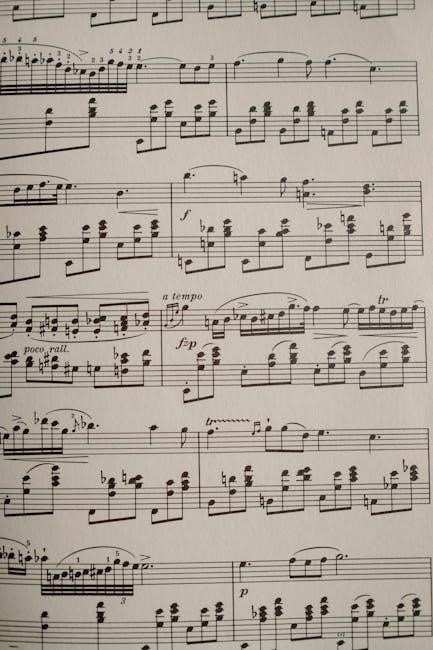
Dynamics in Phantom of the Opera sheet music – indicated by markings like p (piano, soft), f (forte, loud), and crescendos/diminuendos – are crucial for conveying the emotional intensity of the score. Webber’s work relies heavily on dramatic dynamic shifts to build tension and highlight key moments.
Articulation markings, such as staccato (short, detached notes) and legato (smooth, connected notes), shape the phrasing and character of melodic lines. These details are essential for capturing the nuances of the vocal and instrumental parts.
Paying close attention to these markings, often subtle in PDF versions, is vital for an expressive performance. The score frequently demands a wide dynamic range and precise articulation to effectively portray the opera’s themes of passion, mystery, and despair.
Mastering these elements elevates a performance beyond simply playing the notes, bringing the music to life with emotional depth and dramatic flair.
PDF Specifics & Troubleshooting
PDF compatibility can vary; ensure you have an updated reader for optimal viewing of Phantom of the Opera sheet music.
Printing may require adjusting settings for accurate scaling, and low-quality scans sometimes necessitate image enhancement for readability.
Ensuring PDF Compatibility
When downloading Phantom of the Opera sheet music in PDF format, compatibility issues can sometimes arise due to varying PDF reader versions. To guarantee a smooth experience, it’s crucial to utilize an updated PDF reader like Adobe Acrobat Reader, Foxit Reader, or even modern web browsers with built-in PDF viewers.
Older versions might struggle with complex formatting or embedded fonts used in professionally transcribed scores. Regularly updating your PDF reader ensures it supports the latest PDF standards, minimizing rendering errors. If encountering problems, try opening the file in a different PDF reader to isolate the issue. Furthermore, some websites offer multiple PDF versions; selecting a more universally compatible format might resolve compatibility conflicts.
Occasionally, the PDF itself might be corrupted during download, necessitating a re-download from the original source.
Printing Sheet Music from PDF Files
Printing Phantom of the Opera sheet music PDFs requires careful consideration for optimal results. Before printing, access your PDF reader’s print settings. Select “Actual Size” or “100%” scaling to avoid distortion of the musical notation – crucial for accurate reading. Ensure your printer is set to a high-quality print mode for clear lines and legible text.
Preview the print to confirm margins and page orientation are correct. For double-sided printing, verify the binding edge is appropriately set to prevent notes from being cut off. Consider using thicker paper stock, like 24lb or higher, to prevent bleed-through, especially with darker ink. If the PDF contains grayscale images, a grayscale printing option may save ink. Always test print a single page before committing to the entire score.
Dealing with Low-Quality PDF Scans
Encountering low-quality Phantom of the Opera sheet music PDF scans is common. These often present challenges like blurred notes, faded lines, or skewed pages. First, attempt adjusting your PDF reader’s contrast and brightness settings to enhance readability. Some readers offer image enhancement tools to sharpen blurry sections, though results vary.
If the scan is severely distorted, consider using Optical Character Recognition (OCR) software to convert the image to editable text, allowing for corrections. However, OCR isn’t always accurate with musical notation. Alternatively, search for alternative, higher-quality versions of the score from different sources. Comparing multiple scans can help identify and correct errors. Accepting imperfections and focusing on musical context may be necessary when pristine copies are unavailable.
Resources & Communities
Online forums and dedicated websites connect Phantom fans, offering sheet music discussions and support. Explore communities focused on Andrew Lloyd Webber’s work for valuable resources.
These platforms facilitate sharing, troubleshooting, and discovering new arrangements of Phantom of the Opera scores.
Online Forums and Communities for Phantom Fans
Engaging with online communities is invaluable when seeking Phantom of the Opera sheet music. Numerous forums are dedicated to discussing the musical, sharing resources, and assisting fellow musicians.
These platforms often feature dedicated threads for sheet music requests, troubleshooting difficult passages, and comparing different arrangements available in PDF format.
Fans frequently share links to free downloads, discuss the legality of sources, and offer advice on finding high-quality scores.
Active communities provide a space to ask questions about specific songs, instrument arrangements (piano, guitar, flute, etc.), and skill levels – beginner, intermediate, or advanced.
Beyond forums, social media groups and dedicated websites, like those centered around Andrew Lloyd Webber’s broader catalog, can also yield fruitful results in your search for sheet music.
Participating in these spaces fosters a collaborative environment, enhancing your learning experience and access to a wider range of musical resources.
Websites Dedicated to Andrew Lloyd Webber’s Music
Exploring websites specifically devoted to Andrew Lloyd Webber’s work is a prime strategy for locating Phantom of the Opera sheet music in PDF format. These sites often curate comprehensive collections of scores from all his musicals.
While official websites may offer premium, professionally arranged sheet music for purchase, fan-maintained sites frequently compile links to free downloads and resources.
These resources can include piano, guitar, and flute arrangements, catering to various skill levels – from beginner to advanced.
Dedicated fan communities often contribute to these websites, sharing transcriptions, chord charts, and helpful tips for playing the music.
Be mindful of copyright considerations when utilizing free resources, and prioritize sites with clear usage guidelines.
These specialized platforms provide a focused and reliable avenue for discovering sheet music and connecting with fellow enthusiasts.