
What is Life: A Guide to Biology with Physiology
This guide explores life’s intricacies, from molecular interactions to ecosystem dynamics, encompassing marine biology, chemical biology, and the broader biological sciences.
I. Defining Life: Core Characteristics
Defining life proves surprisingly complex, yet several core characteristics universally apply. Living organisms exhibit organization, from atomic levels to complex ecosystems, demonstrating a hierarchical structure. Metabolism, the sum of all chemical processes, fuels life’s activities, including energy utilization and waste removal.
Crucially, organisms maintain homeostasis – a stable internal environment – despite external fluctuations. Growth and development are inherent, guided by genetic information. Reproduction, both sexual and asexual, ensures species continuation.
Furthermore, living entities respond to stimuli, adapting to their surroundings. Evolutionary adaptation, driven by natural selection, allows populations to change over time. These characteristics, observed in marine organisms and across all biological sciences, collectively define the phenomenon we call life.
II. The Hierarchical Organization of Life
Life is organized in a distinct hierarchy, beginning with atoms and molecules – the fundamental building blocks. These assemble into cells, the basic unit of life, performing all necessary functions. Similar cells form tissues, which collaborate to create organs with specialized roles.
Organ systems integrate organs for complex tasks, supporting the function of an entire organism. Organisms of the same species form populations, interacting within communities alongside other species. These communities, coupled with their physical environment, constitute ecosystems.
Understanding this organization, from the smallest particle to vast ecosystems, is crucial in both marine biology and broader biological sciences, revealing interconnectedness and complexity.
A. Atoms and Molecules
Life’s foundation rests upon atoms – carbon, hydrogen, oxygen, nitrogen, phosphorus, and sulfur – combining to form molecules. These aren’t just random arrangements; their specific structures dictate function. Water, though a simple molecule, is essential for life’s processes, acting as a solvent and participant in reactions.
Larger molecules, like proteins and nucleic acids, are built from smaller subunits. The interactions between atoms and molecules, governed by chemical principles, drive biological activity. Understanding these fundamental interactions is key to comprehending both marine and general biological systems.
These molecular interactions are the basis for all life processes, from energy transfer to information storage.
B. Cells: The Basic Unit of Life
Cells are the fundamental units of structure and function in all living organisms. Whether studying marine organisms or broader biological sciences, the cell remains central. They are enclosed by a membrane, controlling what enters and exits, and contain genetic material – DNA – directing cellular activities.

Cells aren’t isolated; they interact, forming tissues, organs, and ultimately, entire organisms. The study of cellular processes, like respiration and division, reveals how life sustains itself. Marine biology specifically examines cellular adaptations to aquatic environments.

Understanding cell structure and function is paramount to understanding life itself.
C. Tissues, Organs, and Organ Systems
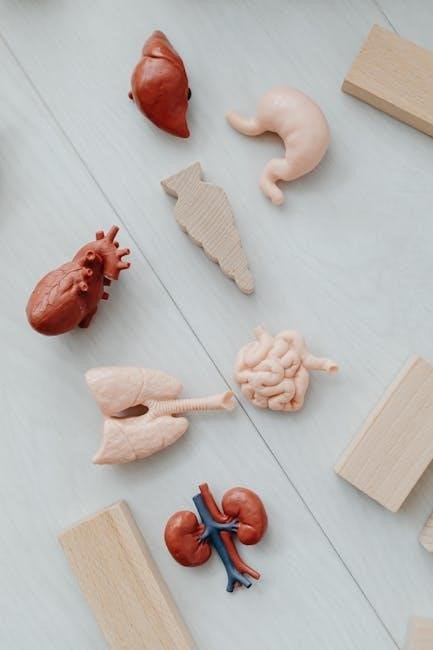
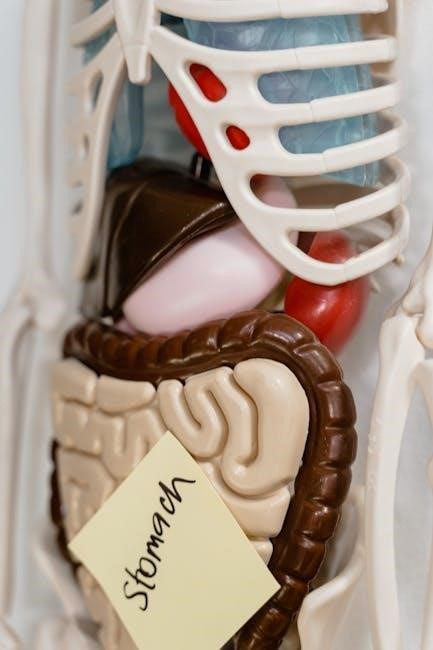
Building upon the cellular level, tissues are groups of similar cells performing specific functions. These tissues then collaborate to form organs – like hearts or gills in marine life – with dedicated roles within an organism. The study of biological sciences encompasses understanding these complex structures.

Organ systems arise when organs work together, such as the circulatory system transporting nutrients. Marine chemical biology investigates how these systems function uniquely in aquatic creatures. Efficient coordination between systems is vital for maintaining life.
This hierarchical organization – cells to tissues to organs to systems – demonstrates the incredible complexity inherent in all living things.
D. Organisms, Populations, Communities, and Ecosystems
Individual organisms, whether a single marine bacterium or a complex whale, represent the fundamental unit of life. These organisms rarely exist in isolation; they form populations of the same species inhabiting a specific area. The biological sciences study these interactions.
Multiple populations interacting create a community, showcasing diverse relationships like predation and symbiosis. Marine biology specifically examines these community dynamics within ocean environments. Finally, ecosystems encompass the community and its non-living surroundings – water chemistry, sunlight, and so on.

Understanding these levels – organism to ecosystem – is crucial for comprehending the interconnectedness of life and its physiological responses to environmental changes.
III. Biological Molecules: The Building Blocks
Life’s structures and functions are built upon a foundation of complex molecules. These aren’t random assemblies; they are carefully constructed from smaller building blocks. The study of these molecules is central to both biology and, specifically, marine chemical biology, which investigates their unique compositions in marine organisms.
Four major classes dominate: carbohydrates provide energy and structural support; lipids store energy, offer insulation, and form cell membranes; proteins perform a vast array of functions, including enzymatic catalysis; and nucleic acids (DNA and RNA) store and transmit genetic information.
Understanding the structure and interactions of these molecules is fundamental to understanding physiological processes.
A. Carbohydrates: Energy Sources and Structural Components
Carbohydrates are essential organic molecules providing both immediate energy and long-term energy storage for living organisms. These compounds, built from carbon, hydrogen, and oxygen, range from simple sugars (monosaccharides) like glucose to complex polysaccharides such as starch and cellulose.
Glucose fuels cellular processes, while starch serves as a readily available energy reserve in plants and animals. Cellulose provides structural support in plant cell walls – a critical component of ecosystems.
In marine environments, carbohydrates play vital roles in algal blooms and as components of marine organism diets, linking to the study of marine biology.
B. Lipids: Energy Storage, Insulation, and Cell Membranes
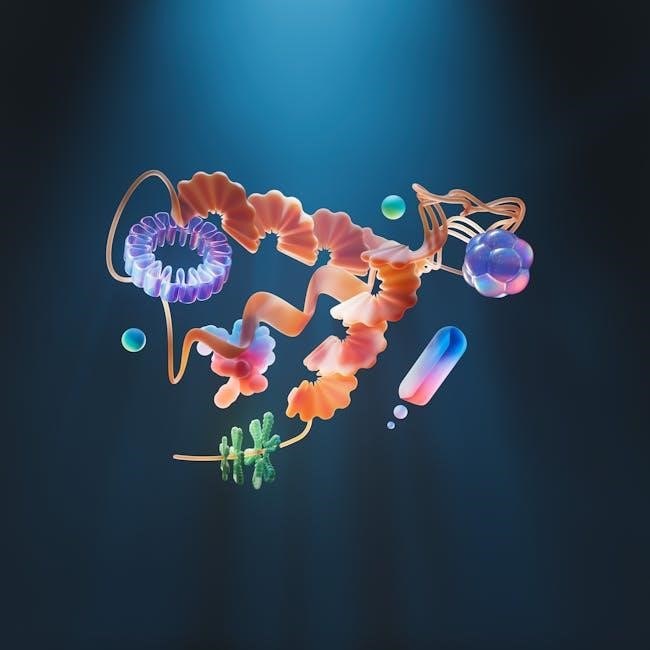
Lipids, encompassing fats, oils, and waxes, are crucial for long-term energy storage, providing more than twice the energy per gram compared to carbohydrates. They also offer vital insulation, protecting organisms from temperature fluctuations, and cushioning organs.
Perhaps most importantly, lipids are the primary structural component of cell membranes, forming a barrier that regulates what enters and exits the cell. Phospholipids, a key type of lipid, create this membrane’s bilayer structure.
Within marine ecosystems, lipids are essential for marine organisms, influencing buoyancy and serving as energy reserves, connecting to marine chemical biology studies.
C. Proteins: Structure, Function, and Enzymes
Proteins are the workhorses of the cell, performing a vast array of functions. Constructed from amino acids, their complex structures – primary, secondary, tertiary, and quaternary – dictate their specific roles. These roles include providing structural support, transporting molecules, and enabling movement.
Crucially, proteins function as enzymes, biological catalysts that accelerate chemical reactions essential for life. Enzyme activity is highly specific, influencing metabolic pathways and cellular processes.
Understanding protein structure and function is central to both biological sciences and marine biology, particularly in studying marine organism adaptations.
D. Nucleic Acids: DNA and RNA – Information Storage and Transfer
Nucleic acids, DNA and RNA, are the molecular basis of heredity and gene expression. DNA (deoxyribonucleic acid) stores genetic information, encoding the instructions for building and operating an organism. Its double helix structure provides stability and facilitates accurate replication.
RNA (ribonucleic acid) plays a crucial role in transferring this genetic information from DNA to ribosomes, where proteins are synthesized. This process, known as gene expression, is fundamental to all life forms.
The study of nucleic acids is vital across all biological sciences, including marine chemical biology, for understanding evolutionary relationships and organismal function.
IV. Cellular Processes: The Engine of Life
Cellular processes are the fundamental activities that sustain life, driving growth, reproduction, and responsiveness to the environment. Cell respiration breaks down nutrients to generate energy (ATP), powering these processes. Conversely, photosynthesis in plants and some bacteria captures solar energy to create sugars.
Cell division, including mitosis and meiosis, enables organisms to grow and reproduce, ensuring the continuation of life. These processes are intricately regulated and essential for maintaining homeostasis.
Understanding these core cellular mechanisms is paramount in biological sciences, from marine biology studying organismal metabolism to physiological investigations of system function.
A. Cell Respiration: Energy Production
Cell respiration is the metabolic pathway that converts biochemical energy from nutrients into adenosine triphosphate (ATP), the cell’s primary energy currency. This process occurs in several stages, including glycolysis, the Krebs cycle, and oxidative phosphorylation, primarily within the mitochondria.
Essentially, it’s a controlled “burning” of fuel molecules like glucose, utilizing oxygen to maximize energy yield. The efficiency of respiration varies among organisms and is crucial for sustaining life functions.
Understanding cell respiration is fundamental to both marine and general biological studies, explaining how organisms obtain and utilize energy for survival and activity.
B. Photosynthesis: Capturing Solar Energy
Photosynthesis is the remarkable process used by plants, algae, and some bacteria to convert light energy into chemical energy in the form of glucose. This occurs within chloroplasts, utilizing chlorophyll to capture sunlight. Water and carbon dioxide are essential inputs, with oxygen released as a byproduct.
This process is the foundation of most ecosystems, providing the primary source of energy for nearly all life on Earth. It’s particularly vital in marine environments, supporting phytoplankton – the base of the oceanic food web.
Studying photosynthesis is crucial for understanding energy flow and the interconnectedness of life, linking directly to marine biology and broader ecological principles.
C. Cell Division: Growth and Reproduction
Cell division is fundamental to life, enabling growth, repair, and reproduction in all organisms. This process involves two main types: mitosis and meiosis. Mitosis creates identical copies of cells for growth and tissue repair, essential for maintaining organismal integrity.
Meiosis, conversely, produces gametes (sperm and egg cells) with half the number of chromosomes, crucial for sexual reproduction and genetic diversity. Understanding cell division is paramount in biological sciences, impacting fields like marine biology where reproductive cycles are key.
Errors in cell division can lead to developmental issues or diseases, highlighting its precise and vital nature.
V. Genetics and Heredity: Passing on Traits
Genetics and heredity explore how traits are passed from parents to offspring. DNA, the blueprint of life, contains genes – segments coding for specific characteristics. DNA replication ensures accurate copying of this genetic information during cell division, maintaining hereditary continuity.
Gene expression, the process of turning genes “on” or “off,” dictates protein production and ultimately, an organism’s traits. Mendelian genetics provides the foundational principles of inheritance, explaining dominant and recessive alleles.
These principles are vital across biological disciplines, including marine biology, where understanding genetic adaptations in marine organisms is crucial.
A. DNA Structure and Replication
DNA, deoxyribonucleic acid, possesses a distinctive double helix structure, resembling a twisted ladder. This structure, composed of nucleotides – adenine, thymine, guanine, and cytosine – encodes genetic instructions. The sequence of these bases determines an organism’s traits.
DNA replication is a crucial process ensuring genetic information is accurately copied before cell division. Enzymes unwind the double helix, and each strand serves as a template for building a new complementary strand. This semi-conservative replication results in two identical DNA molecules.
Understanding DNA’s structure and replication is fundamental to comprehending heredity and genetic variation, impacting fields like marine chemical biology.
B. Gene Expression: From DNA to Protein
Gene expression is the process by which information encoded in DNA is used to direct the assembly of proteins. This occurs in two main stages: transcription and translation. Transcription involves copying a DNA sequence into RNA, specifically messenger RNA (mRNA).
Translation then utilizes mRNA as a template to synthesize a protein. Ribosomes, cellular structures, read the mRNA code and assemble amino acids in the correct order, forming a polypeptide chain that folds into a functional protein.
This intricate process links genotype (DNA) to phenotype (observable traits), crucial for understanding biological functions across all life forms, including marine organisms.
C. Mendelian Genetics: Principles of Inheritance
Mendelian genetics, founded by Gregor Mendel, explains how traits are passed from parents to offspring. Key principles include the Law of Segregation, stating that allele pairs separate during gamete formation, and the Law of Independent Assortment, where genes for different traits assort independently;
These laws govern inheritance patterns, leading to predictable ratios in offspring. Concepts like dominant and recessive alleles, genotypes, and phenotypes are central to understanding heredity. This applies universally, from terrestrial plants and animals to marine life and their adaptations.
Understanding these principles is fundamental to studying biological diversity and evolutionary processes.
VI. Physiology: How Living Organisms Function
Physiology investigates the mechanical, physical, and biochemical functions of living organisms. It explores how organisms maintain homeostasis – a stable internal environment – despite external changes. This involves intricate interactions between various systems, including the nervous system for rapid communication and the endocrine system for hormonal regulation.
The circulatory system plays a vital role in transporting nutrients, oxygen, and removing waste products. These physiological processes are essential for survival, impacting everything from marine organisms adapting to ocean currents to terrestrial animals regulating body temperature.
Understanding these functions reveals the complexity and elegance of life.
A. Homeostasis: Maintaining Internal Balance
Homeostasis is the ability of an organism to maintain a stable internal environment, despite fluctuations in the external world. This dynamic equilibrium is crucial for optimal cell function and, ultimately, survival. Physiological processes constantly adjust parameters like temperature, pH, glucose levels, and water balance.
Feedback mechanisms, both negative and positive, are central to homeostatic regulation. Negative feedback loops counteract changes, while positive feedback amplifies them – though less common. These systems involve coordinated responses from multiple organ systems, ensuring a consistent internal milieu.
Disruptions to homeostasis can lead to illness and disease, highlighting its importance.
B. Nervous System: Communication and Control
The nervous system is the body’s rapid communication network, responsible for detecting, processing, and responding to stimuli. It’s built upon specialized cells called neurons, which transmit electrical and chemical signals.
This system is divided into the central nervous system (brain and spinal cord) and the peripheral nervous system (nerves extending throughout the body). Sensory receptors gather information, which is then relayed to the brain for interpretation. Motor neurons carry signals from the brain to muscles and glands, initiating responses.
Effective communication is vital for coordinating bodily functions and interacting with the environment.
C. Endocrine System: Hormonal Regulation
The endocrine system utilizes hormones – chemical messengers – to regulate various bodily functions over longer timescales than the nervous system. Glands, such as the pituitary, thyroid, and adrenal glands, synthesize and release these hormones directly into the bloodstream.
Hormones influence growth, metabolism, reproduction, and mood. They bind to specific receptors on target cells, triggering a cascade of events that alter cellular activity. This system works in concert with the nervous system to maintain homeostasis, ensuring a stable internal environment.
Precise hormonal balance is crucial for overall health and well-being.
D. Circulatory System: Transport of Nutrients and Waste
The circulatory system, encompassing the heart, blood vessels, and blood, is vital for transporting essential substances throughout the body. This intricate network delivers oxygen, nutrients, hormones, and immune cells to tissues, while simultaneously removing metabolic waste products like carbon dioxide.

Blood, a complex fluid, carries these materials, and its circulation is driven by the heart’s pumping action. Different types of blood vessels – arteries, veins, and capillaries – facilitate this transport.
Efficient circulation is paramount for maintaining homeostasis and supporting cellular functions, ensuring organismal survival.